Paz de la HuertaUSA
Paz de la Huerta’s (b. 1984 in New York City, US) evolution from a cinematic icon to a dedicated visual artist represents a profound reclamation of her personal narrative. While she gained international fame for her raw performances in films like Enter the Void and the series Boardwalk Empire, she has increasingly pivoted toward painting as her primary medium of expression, describing her creative process as an essential act of “self-adoption” and survival. Her transition into the fine art world has been marked by a move away from the external gaze of the film industry toward an internal, highly private exploration of memory, heritage, and healing.
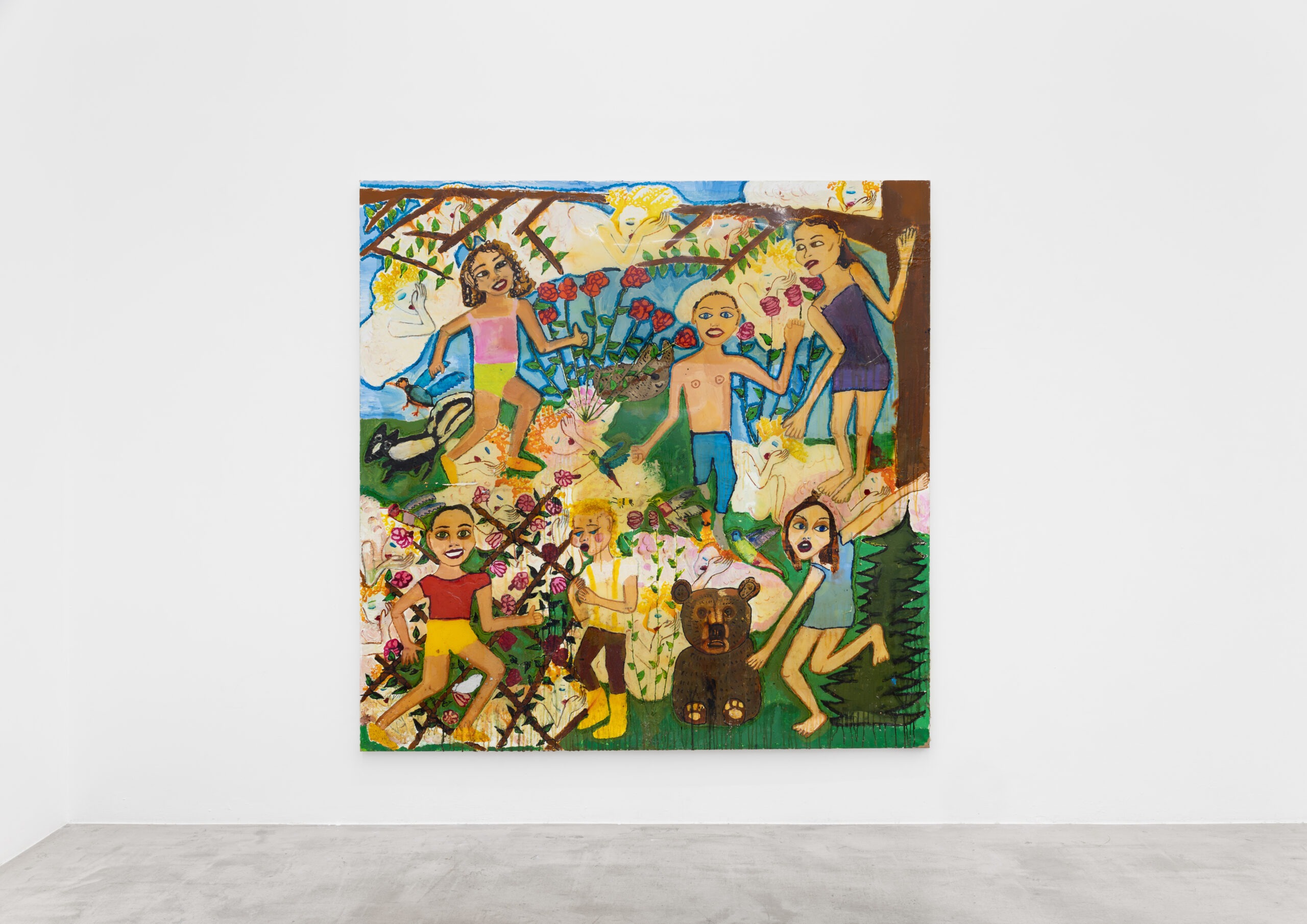
Her artistic style is characterized by an instinctive, “outsider” aesthetic that leans into the maximalist and the surreal. Utilizing a combination of watercolor, ink, and oil resin, de la Huerta creates dense, layered compositions that she refers to as “visual gospels.” These works often feature recurring motifs of “crying angels” and “fairy forests,” which serve as symbolic protectors and sanctuaries from a turbulent past. A defining technical element of her work is the application of thick oil resin; this finish acts as a permanent seal, forcing a definitive end to the painting process and reflecting her philosophical interest in the tension between control and surrender.
Thematically, her paintings are deeply rooted in her Spanish aristocratic lineage and her Catholic upbringing. She frequently explores concepts of sacrifice, martyrdom, and rebirth, drawing on the heavy iconography of religious tradition to process contemporary trauma. Her 2024 debut solo exhibition, El Vallé de Lagrimas (The Valley of Tears) in Paris, and her 2025 show Sacrifice in Berlin, solidified her standing in the contemporary art scene. These exhibitions showcased her ability to translate high-intensity emotional experiences into a tactile, vivid language of paint. Supported by mentors like Francesco Clemente and influenced by the dark, haunting mastery of Francisco Goya, de la Huerta’s work stands as a defiant testament to the power of art as a tool for transcendence and the preservation of the self.